Piano Tap: Rush Song Game
- 4.7
- Rating
- 500.00K
- Installs
- Free
- Price

 Analysis by App-foxy
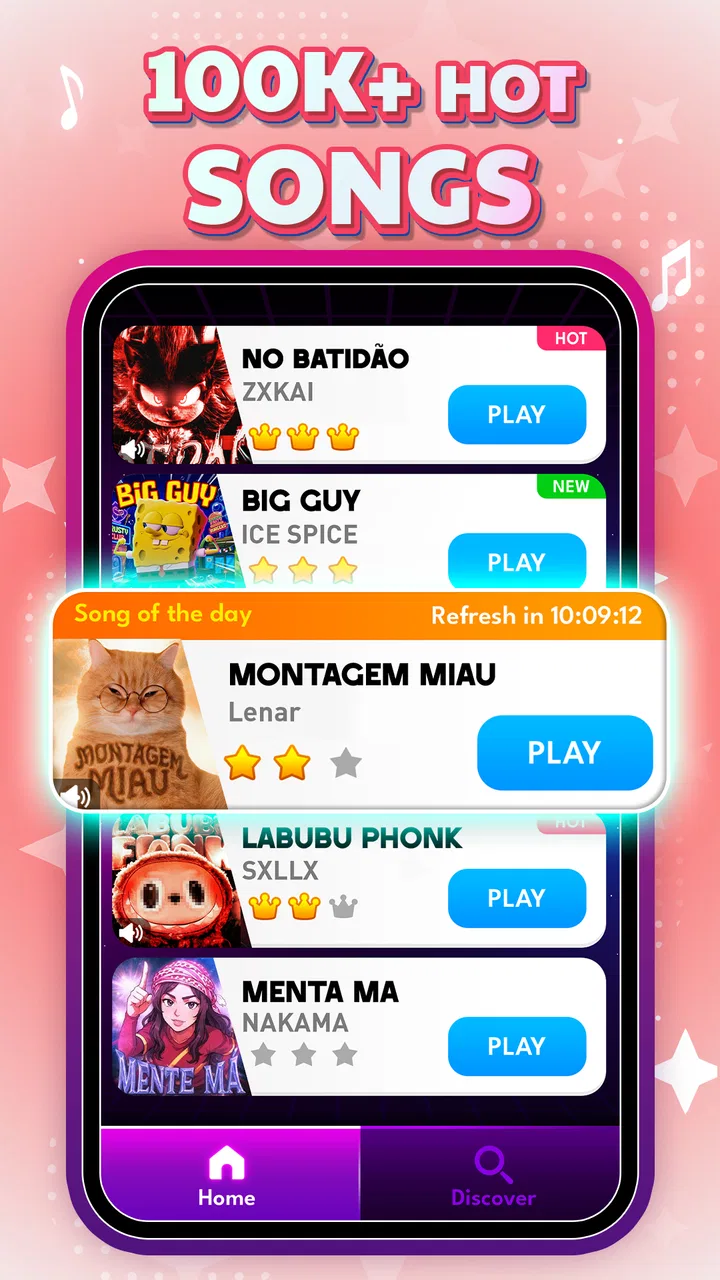
I usually judge a music game by one simple question: does it make me want to play one more song, even when I only opened it for a short break? Piano Tap: Rush Song Game aims directly at that feeling. It is a free rhythm game from NekoBeat Studio: Cozy Cats & Cute Music Games, built around tapping tiles while tracks move toward the play area. Its style combines cute idol presentation with familiar rhythm-game pressure, drawing from EDM, anime songs, and TikTok-oriented hits.
That combination makes it easy to understand within seconds, but choosing it over another music game depends on what you want from the experience. I would not approach it as a substitute for a serious music-training tool or a deep rhythm simulator. I see it more as a quick, approachable game for people who enjoy recognizable musical moods, colorful anime-inspired presentation, and the satisfaction of keeping a tapping sequence alive.
The game is free, rated for Everyone, and has reached over one hundred thousand installs. Its average rating is 4.8 from around one thousand one hundred ratings, which suggests that its core appeal is landing well with the audience that has tried it. It launched on March 20, 2026, and version 2.1.0 is the version I would look for when deciding whether the current experience is mature enough for regular play.
You May Also Like

 Pandora - Music & Podcasts
Pandora’s Music Is Easy to Start, but Harder to Recover
Pandora’s strength is its low-effort path from a seed to a station. Its weak spot is how much confidence it asks you to place in connection, setup, and quiet recovery.

 AccuWeather: Weather Radar
AccuWeather Review: A Quick, Clear Forecast for Everyday Decisions
For everyday plans, the best forecast is the one you can understand quickly. AccuWeather makes rain timing, radar, and local conditions easy to act on, with a few trade-offs.

 Hill Climb Racing
Why Hill Climb Racing Still Turns Crashes Into One More Run
A tiny car, a bumpy hill and one more upgrade: Hill Climb Racing keeps resurfacing because its simple chaos makes every near-miss feel personal.

 AliExpress - Shopping App
AliExpress Makes Global Shopping Feel Personal, but Shoppers Bear the Risk
AliExpress turns a global marketplace into a pocket-sized discovery engine. Its reach is useful, its shopping loop compelling, and its trade-offs easy to miss.

 Lords Mobile: Kingdom Wars
Lords Mobile Is a Kingdom-Building Routine, Not a Quick Match
A case-by-case verdict on the building, battles, device demands, and social commitments that make Lords Mobile rewarding for some players and exhausting for others.

 PDF Scanner app - TapScanner
TapScanner Makes Paperwork Easier to Capture, Check, and Share
TapScanner makes scanning with a phone feel less like a rescue operation and more like a dependable step in getting work done. Its capture tools are useful, though not flawless.
More From Our News Desk
View All News


How to Decide Whether This Rhythm Game Fits You
I look at whether a rhythm game fits not only by how quickly it wins me over, but by whether it still feels useful once its look and novelty are familiar. The sections that follow focus on what could make this one part of a regular routine, what might wear thin, and how to tell whether its lighter style suits your habits better than a deeper alternative.
The first decision is about the kind of music-game session you want
Before installing any tile-tapping game, I think about the shape of my available time. If I have only a few minutes while waiting for a bus, taking a break from work, or winding down before bed, a game based on immediate tapping is more practical than a large rhythm title that asks me to learn a complicated interface. Piano Tap: Rush Song Game is designed around that quick entry point. You can understand the basic action without reading a long tutorial or learning a full control scheme.
The important distinction is between casual rhythm play and performance-focused rhythm play. Casual play is about reacting to the flow, enjoying the song style, and trying to improve a personal run. Performance-focused play is about precise timing, difficult note patterns, detailed scoring, and long-term mastery. This game is more attractive to the first group, especially players who want a friendly presentation rather than an intimidating arcade atmosphere.
I would also consider your tolerance for repetition. Tile games are naturally built around repeating a small set of gestures. That can be calming when the track and speed feel right, but it can become monotonous if you expect every song to introduce a radically different mechanic. The appeal here comes from the combination of music selection, visual theme, and increasing pressure during a run, not from a huge range of controls.
Who will probably enjoy it most
I think the best audience is someone who already likes tapping along to music on a phone but does not want to commit to a demanding rhythm-game setup. The cute idols and anime-flavored atmosphere give it a softer identity than a purely abstract piano game. Players who discover music through short-form video trends may also appreciate the general direction of the song selection, since the game clearly wants to feel current and immediately familiar rather than classical or formal.
It can also work well for younger players because the content rating is Everyone and the interaction is easy to grasp. That does not automatically make every session equally suitable for every child, of course, but the overall framing is much more approachable than games built around darker stories, competitive conflict, or complicated role-playing systems.
I would be more cautious about recommending it to someone who wants to learn piano, read sheet music, or develop dependable musical timing outside the game. Tapping falling tiles can improve attention and reaction habits, but it should not be confused with structured instrument practice. For that goal, a dedicated music-learning app is the better category.
What I pay attention to during the first session
My first test is not whether I can finish a track. It is whether the game communicates the beat clearly enough that I can recover after a mistake. A good casual rhythm game lets me understand why I missed, whether I reacted late, tapped the wrong area, or simply lost concentration. That distinction matters because a game can feel unfair when its feedback is vague, even if the underlying timing is reasonable.
I also notice how quickly the presentation gets out of the way. The idol theme should add charm without covering the play area or distracting from the moving tiles. When I play on a small phone, visual clarity matters more than decorative detail. My practical advice is to begin with shorter sessions and pay attention to whether your thumbs or fingers are blocking the lower part of the screen. A comfortable grip can make a bigger difference than chasing a perfect score immediately.
Where the game wins over a plain piano-tile clone
The strongest point is its identity. A generic piano-tile game can provide the same basic tapping idea, but it may feel interchangeable after a few minutes. Piano Tap: Rush Song Game gives that familiar action a specific mood through cute idols, anime-inspired styling, and a song direction that includes EDM and popular short-video energy. That makes the game easier to remember and gives players a reason to return beyond the gesture itself.
The music focus also affects how I use it socially. I can imagine showing it to a friend who enjoys anime songs but normally avoids rhythm games because they look too technical. The visual theme creates an easy conversation starter, while the simple controls let the other person try a track without needing prior experience. It is a small advantage, but it is exactly the kind of advantage that helps a casual game survive on a crowded phone.
Another strength is the low commitment created by its free price. I can test the central loop without making a purchase decision first. That matters for this genre because rhythm games are highly personal: one player may enjoy the song mood and tapping pace, while another may find the same format repetitive. Free access lowers the cost of discovering which side you are on.
A realistic everyday way to use it
Imagine finishing lunch with ten minutes before your next task. You do not want to start a story game because you may need to stop suddenly, and you do not want to open a competitive multiplayer match that could leave you frustrated when the break ends. This is where the game makes sense. You can play a short rhythm session, focus on a track, and put the phone away without needing to remember a complicated plot or manage a team.
I would use it in the same way during a commute, provided I had a stable enough view of the screen and was not trying to play while walking. The useful habit is to treat each attempt as a small timing exercise rather than a test of patience. If a song starts going badly, I would restart once, then switch tracks or stop. Repeating the same failed run too aggressively can turn a relaxing break into a frustrating one.
For a more deliberate session, I would choose one song and make several attempts with a different goal each time. The first run would be about learning the movement. The second would focus on avoiding rushed taps. The third would be about maintaining a steady posture and keeping my eyes near the next section of the play area. This approach makes the game feel less like mindless tapping and more like a compact practice routine, even though it remains entertainment rather than formal training.
Three useful habits that are easy to overlook
First, I would avoid playing with a constantly changing grip. On a phone, moving from one-handed play to two-handed play halfway through a track can make the same pattern feel harder because your visual alignment changes. Pick the grip that keeps your tapping area visible and use it consistently while learning a song.
Second, I would listen for the beat instead of staring only at the tiles. The visual movement is the immediate guide, but the music can help predict the rhythm and reduce frantic reactions. This is particularly useful with energetic EDM-style tracks, where the screen may feel busy. Letting the audio establish a pulse can make your taps calmer.
Third, I would judge progress by consistency rather than by one lucky run. A single strong attempt can happen because the pattern happened to match your attention level. Repeating a track successfully after a short break is more meaningful. This is a better way to decide whether the game is rewarding you with genuine improvement or merely giving you occasional bursts of success.
Where other categories may fit better
The usual alternatives fall into several groups, and each solves a different problem. A traditional piano-tile game may be better if you want the most stripped-down possible interface. It can remove the idol and anime presentation, leaving you with a cleaner reaction test. That is useful when decoration feels distracting or when you want to compare your tapping performance without a strong theme around it.
A deeper rhythm game may be the better choice if you want multiple input types, demanding charts, competitive rankings, or a long-term mastery path. Those games often reward players who enjoy studying patterns and refining exact timing. I would choose that category over this one if my main motivation were technical challenge rather than a pleasant, accessible music session.
A music-learning app is the obvious alternative for anyone who wants transferable skills. It can teach notes, chords, rhythm reading, or instrument technique in a structured way. Piano Tap: Rush Song Game may make you more attentive to timing, but it does not occupy the same role. Confusing the two would lead to disappointment.
There is also a difference between this game and a music-streaming service. Streaming lets you choose songs for passive listening or background activity; this game asks you to interact with the music. If you want to relax without looking at your phone, the streaming option wins. If you want your hands and attention involved, the game has the advantage.
Finally, players who dislike anime-inspired visuals or idol themes may simply feel more comfortable with an abstract rhythm title. The presentation is part of the reason to choose this game, so it is also part of the reason some people will skip it. I would not recommend forcing yourself through a style you already know you dislike just because the underlying tapping mechanic is familiar.
Limitations that affect the decision
The biggest limitation is the narrowness of the central interaction. Tapping tiles is easy to learn, but that also means the game has to rely heavily on song variety, pacing, and presentation to stay interesting. If you need complex mechanics to remain engaged, the basic loop may not hold your attention for long.
The song direction may also divide players. EDM, anime songs, and TikTok-oriented hits create a clear personality, but they will not match every listener’s taste. Someone looking for jazz, classical repertoire, acoustic songwriting, or a carefully arranged instrumental catalog may find the musical identity too specific.
There is a practical concentration issue as well. Fast tapping can become tiring when played on a small screen, particularly if you tense your hands or hold the phone awkwardly. I would take short breaks rather than treating every session as an endurance challenge. If the game stops feeling comfortable, that is a sign to change your posture or leave it for later, not necessarily to push harder.
Another trade-off is that the game’s accessibility can reduce its sense of depth for experienced rhythm players. A newcomer may see the simple controls as welcoming, while a veteran may see them as limited. Neither reaction is wrong; they reflect different expectations. The right question is whether you want a friendly entry point or a system that keeps revealing new technical layers.
What switching to it really costs
Because the game is free, the financial barrier is low, but switching still has a time cost. You need to learn how its visual rhythm feels, decide whether the music fits your taste, and determine whether the tapping pace remains enjoyable after the novelty of the theme fades. I would give it several short sessions rather than one long test, because fatigue can make a simple rhythm game seem worse than it is.
There is also a habit cost if you are moving from a more advanced rhythm game. Your expectations about scoring, chart complexity, and control precision may not transfer directly. I would approach it as a lighter side game instead of demanding that it replace a favorite specialist title. That framing makes the change feel complementary rather than disappointing.
On compatible devices, the minimum operating-system requirement is Android 7.0 or later. That keeps the potential audience broad, but compatibility alone does not guarantee that every phone will feel equally comfortable for rapid tapping. Screen size, touch responsiveness, and how securely you can hold the device all matter in practice. If you are choosing between an older phone and a newer device, I would test responsiveness before committing to long sessions.
The current version is 2.1.0, so I would install that version rather than judging the game from an old clip or an outdated impression. Music games can feel noticeably different after changes to song presentation, interface flow, or timing balance. Keeping the installed version current is especially sensible when your main complaint is a small usability issue rather than the core concept.
How I would decide after trying it
After a few sessions, I would ask myself three practical questions. Did I enjoy the music enough to replay tracks? Could I understand my mistakes without feeling that the game was arbitrary? And did the cute idol presentation make the experience more inviting, or did it get in the way? These questions are more useful than looking only at a rating because they connect the game to your own habits.
I would also compare the reason I return. If I come back because I want to beat a personal run, the game is doing its job as a rhythm challenge. If I return because I enjoy the atmosphere but rarely want to tap, I may prefer a music app or a visual experience instead. If I stop opening it because the songs feel repetitive, a broader rhythm game is probably a better long-term home.
My recommendation for different players
I recommend Piano Tap: Rush Song Game to casual players who want a free mobile music game with cute idols, anime-flavored style, and a simple tapping loop. It is particularly suitable for short breaks, first-time rhythm-game players, and people who enjoy EDM or current pop-culture music moods. The Everyone rating and straightforward concept make it easy to suggest to a broad audience.
I would recommend trying it before choosing a more demanding rhythm title if you are unsure whether the genre is for you. It gives you a low-risk way to discover whether reacting to moving tiles feels satisfying. Start with relaxed sessions, use headphones if you want the beat to guide you more clearly, and focus on repeatable timing rather than chasing a perfect attempt immediately.
I would skip it if your priority is piano education, advanced chart mastery, a wide range of musical genres, or a completely minimal interface. In those cases, a learning tool, specialist rhythm game, or plain piano-tile alternative will probably serve you better. This is not a flaw so much as a boundary around what the game is trying to be.
My final view is positive but specific: this is a friendly, themed rhythm game rather than an all-purpose music app. Its free entry, approachable tapping, and cute idol identity give it a clear place in a phone library. Choose it when you want a quick musical challenge with personality, not when you need a deep instrument lesson or an endlessly complex competitive system. For that particular use, it is an easy game to try and a reasonable one to keep.
FAQs for Piano Tap: Rush Song Game
01What is Piano Tap: Rush Song Game about?
Piano Tap: Rush Song Game is a rhythm-based mobile game where players tap on the screen to play popular songs. The game challenges your timing and coordination as you tap along with the music. It's designed for music lovers and rhythm game enthusiasts, offering a wide variety of tracks to play and master.
02Do I need an internet connection to play Piano Tap: Rush Song Game?
While Piano Tap: Rush Song Game can be played offline, an internet connection is required to access certain features, such as downloading new songs or participating in online leaderboards. Playing offline restricts access to some content, so connecting to the internet enhances the overall experience.
03Are there in-app purchases available in Piano Tap: Rush Song Game?
Yes, Piano Tap: Rush Song Game offers in-app purchases. Players can buy additional songs, remove ads, or purchase special items to enhance gameplay. While the game is free to download, these purchases can improve the gaming experience and provide access to exclusive content.
04Is Piano Tap: Rush Song Game suitable for all ages?
Piano Tap: Rush Song Game is suitable for a broad audience, including younger players. Its simple mechanics and engaging music make it accessible to all age groups. However, parents should be aware of in-app purchases and ensure appropriate settings are in place to manage spending.
05What are the device requirements for Piano Tap: Rush Song Game?
Piano Tap: Rush Song Game requires a smartphone or tablet with a stable operating system, either Android or iOS. The game is optimized for a wide range of devices, but for the best experience, ensure your device is running the latest OS version and has sufficient storage space.
Pros
- Engaging rhythm gameplay
- Wide variety of songs
- Smooth touch controls
- Simple
- intuitive interface
- Regular updates with new tracks
Cons
- Ads can be intrusive
- Limited offline play
- Some songs require purchase
- Occasional lag on older devices
- Graphics are basic and minimalistic

Piano Tap: Rush Song Game
Gallery